
10
April, 2026
Ten years ago, I learned directly from prominent brokers how intraday trading actually works at the institutional level. I watched how money really moves. And I realized something: most traders aren't losing because they're stupid. They're losing because they're playing a game without understanding the rules.
The brokers know the moves. The banks know the structure. Institutional traders see patterns that retail traders miss entirely.
I spent a decade learning their playbook. And I'm not here to tell you the system is rigged — you already know that. I'm here to teach you how to read it.
Start Here. Answer 5 questions to:
Already know what you want? Create your free account.

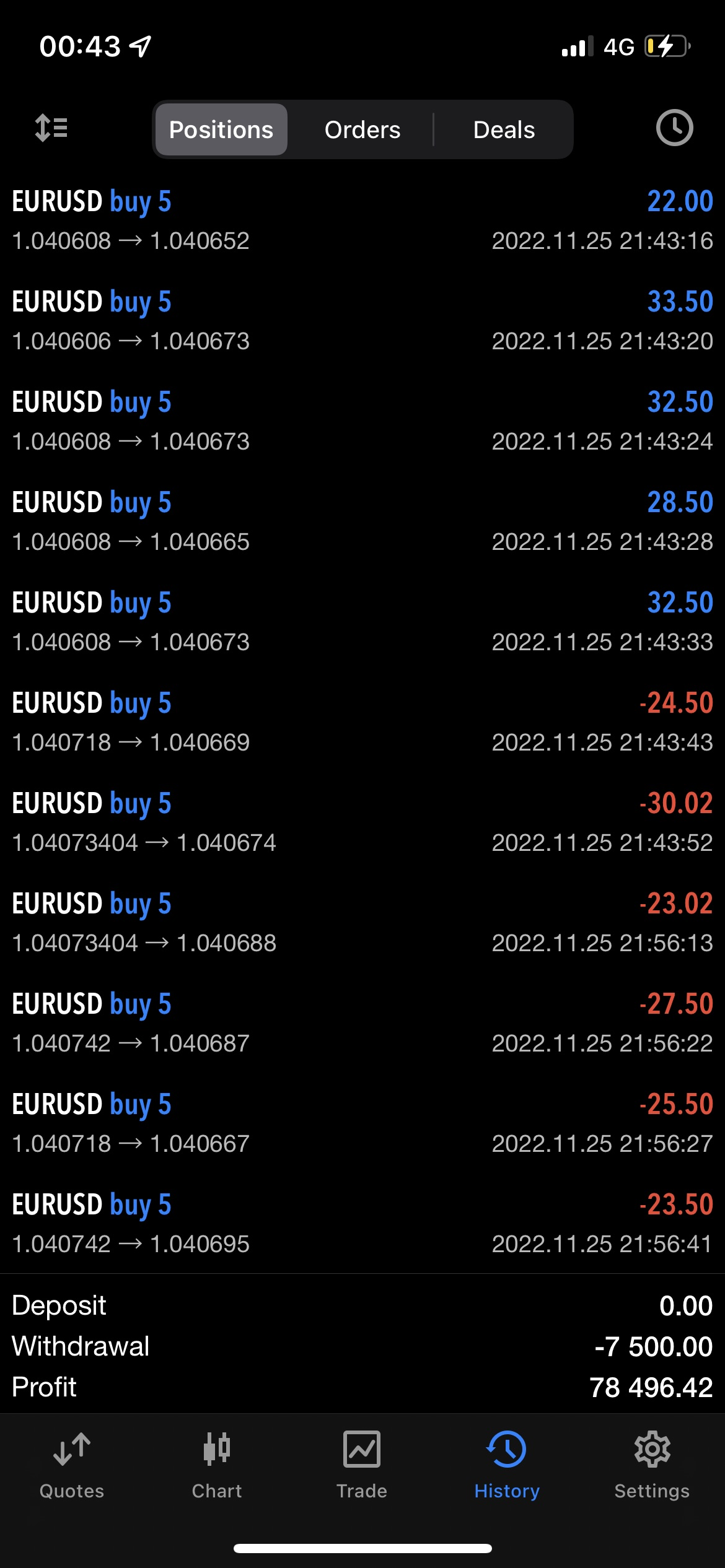
Nathan Bank$
Liquidity accumulates where traders place stops.
Institutional participants know this.
Price often moves toward these areas before expanding in the true direction.
The result is what many traders experience as a “stop hunt.”
Professionals recognize it as liquidity access.
Once liquidity is accessed, markets frequently move quickly.
This occurs because the orders resting at those levels have been filled.
The result is an imbalance that produces expansion phases.
Understanding this sequence allows traders to position themselves with the movement rather than against it.
Markets tend to develop through a repeating structural cycle.
The Institutional Expansion Cycle™ teaches traders how to recognize where price sits within this process.
Once this structure becomes clear, charts begin to look very different.
Inside the Core Framework you will learn to:
Build a structural understanding of how price develops.


Institutional participants operate with large inventory positions.
Price movement reflects the process of building, distributing, and managing that inventory.
Liquidity concentrates where stops, breakout orders, and resting bids accumulate.
Understanding these locations reveals where price is likely to travel next.
Once liquidity is accessed, price often moves quickly as imbalance develops.
These expansion phases are where structured entries provide statistical advantage.
Markets develop in recurring structural cycles.
The framework we teach helps traders recognize these patterns across all timeframes and markets.

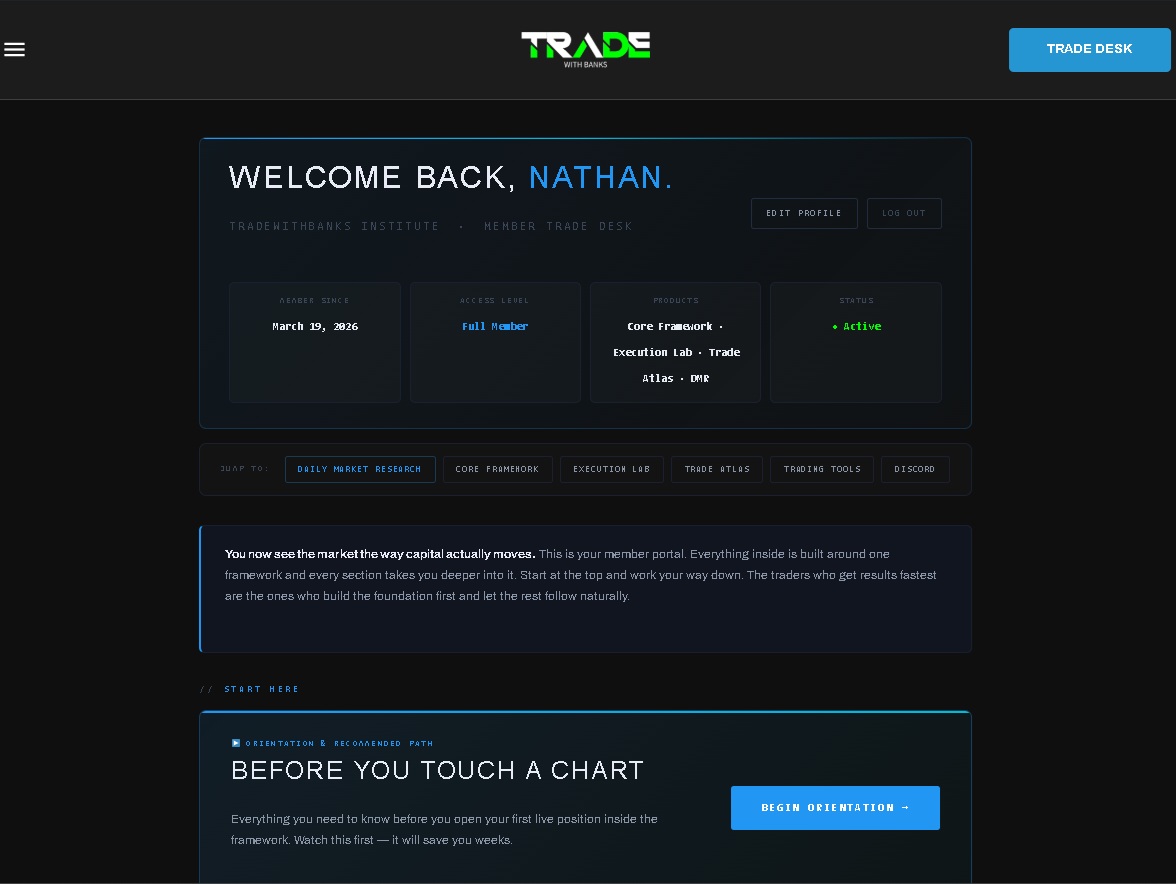
Members receive access to Daily Market Research.
A private research area where Nathan shares:
- Weekly structural analysis
- Institutional bias outlook
- Trade development insights
These observations help traders align their thinking with professional market structure.
Get The...
Develop real-world execution based on predictable liquidity sweeps and expansion phases using our MT4/MT5 liquidity template.
includes:
This template works alongside the Institutional Expansion Cycle™ framework, helping traders visualize liquidity, structure, and expansion directly on the chart, starting with Monday (gold box).
“
"The TradeWithBanks mentorship has been worth its weight in gold.
The framework Nathan teaches completely changed how I see the market. The concepts connected pieces I had been missing for years."
If you are serious about understanding market structure with clarity, begin with the Core Framework.
Build a structural understanding of how price develops.
Examples Included
Lessons
10
April, 2026
10
April, 2026
10
April, 2026

Contact | Disclaimer | Terms of Service | Privacy Policy | Anti-Spam Policy | Copyright Notice| DMCA Compliance | Federal Trade Commission Compliance | Social Media Disclosure
Copyright 2026 TradeWithBanks.com, all rights reserved.
